
Open Source Consent Management Platform in 2026: 7 Live Checks Before You Trust the Stack
A useful guide to open source consent management platform should help readers understand both the rule and the behavior behind the rule. That is where consent topics become genuinely practical instead of sounding like recycled compliance copy.
Why Open Source?
The linked DataShyre articles cover the nearby topics, while this explainer should stay focused on plain-English direction for publishers, operators, and marketers.
“Open source CMPs let you audit every line of code that decides whether a cookie is served.” — GDPR Cookie Consent Guide, 2026
7 Live Checks Before You Trust the Stack
- Data Minimisation Alignment
Ensure the platform respects the principle of data minimisation – it should only collect what’s strictly necessary.
- Granular User Rights
Verify that the stack provides easy‑access pathways for users to review, edit, and delete their consent preferences.
- Cross‑Border Compliance
Confirm built‑in support for GDPR, CCPA/CPRA, and CPRA‑specific requirements (e.g., opt‑out portals).
- Auditability & Logging
Look for immutable audit logs that record every consent decision – a must for regulators.
- Third‑Party Integration
The platform should integrate smoothly with popular analytics, ad‑tech, and CMS tools (WordPress, Shopify, etc.).
- Community Health
Active development, regular releases, and a responsive issue tracker signal long‑term viability.
- Performance Under Real‑World Load
Test the CMP under realistic traffic patterns; latency matters for user experience and compliance.
Current Regulatory Landscape (2026)
The regulatory environment is tightening. Here’s what you need to know:
- GDPR continues to enforce strict consent granularity and the right to erasure.
- CCPA/CPRA expands the scope of “personal information” and introduces new opt‑out mechanisms.
- California Privacy Rights Act (CPRA) adds enhanced rights for minors and expanded breach notification duties.
- EU Digital Omnibus Package (late 2025) simplifies cross‑border data transfers but raises stricter transparency standards.
“Regulators are moving from ‘opt‑in’ to ‘opt‑out’ as the default, forcing consent management platforms to become more powerful.” — GDPR Cookie Consent Guide, 2026
Top Open Source CMPs for 2026
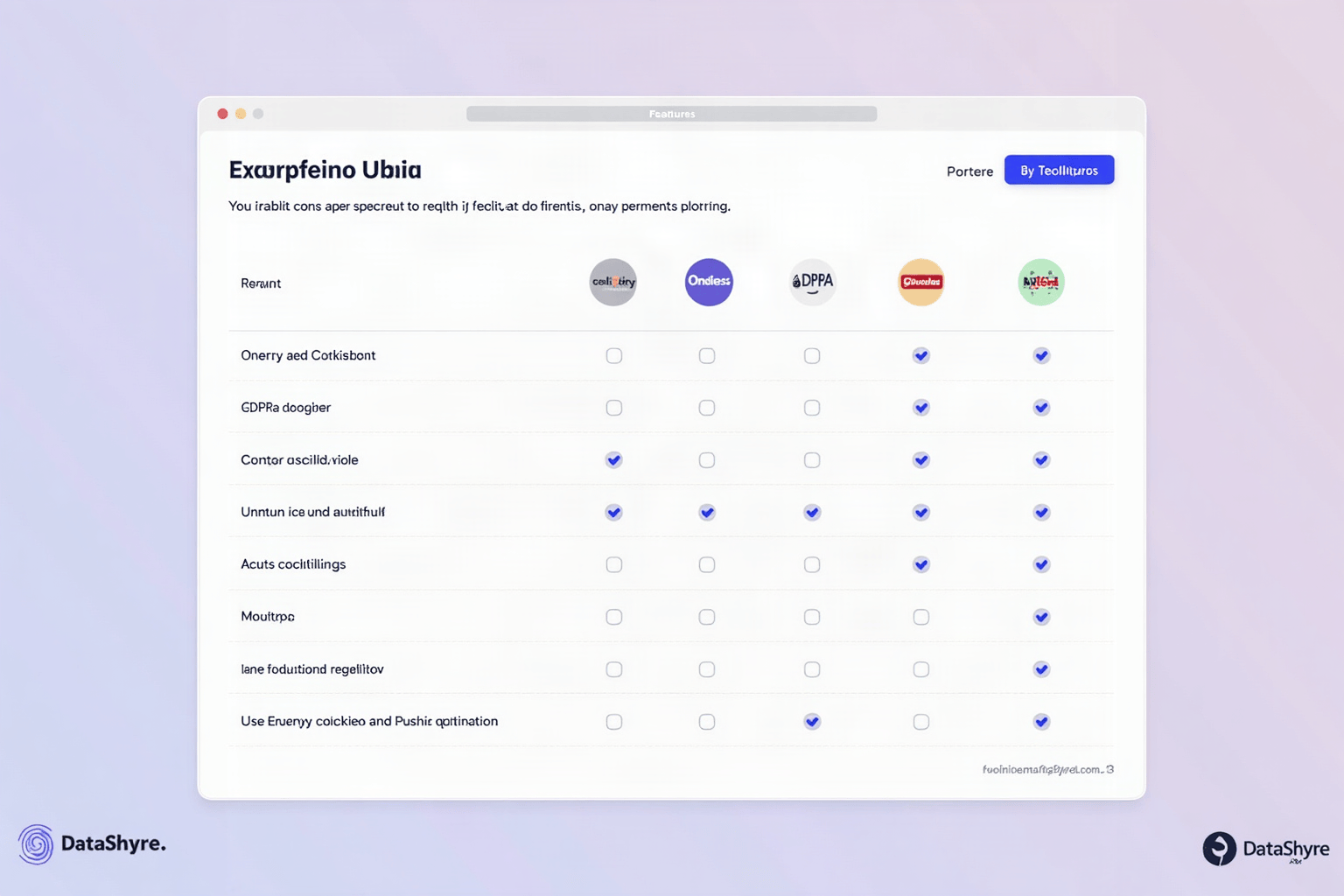
| Platform | Strengths | Best For | |———-|———–|———-| | Klaro | Granular consent, multilingual support, strong privacy by design | | Cookiebot | Enterprise‑grade compliance, extensive integrations | | Onetrust | Comprehensive CMP suite, robust reporting | | Matomo (with CMP module) | Self‑hosted analytics + consent | | Datashye | Built‑in cookie management, GDPR‑first architecture |
Getting Started
- Define your consent taxonomy – map each data category (analytics, marketing, essential).
- Select a platform based on the 7 checks above.
- Implement a privacy‑by‑design workflow – embed consent banners early in the site build.
- Test with real users – simulate opt‑in/opt‑out scenarios.
- Monitor continuously – privacy regulations evolve; keep the stack updated.
Internal Resources
- GDPR Cookie Consent Guide – comprehensive compliance checklist
- CCPA/CPRA Compliance Checklist – state‑specific requirements
- Open Source CMP Comparison Matrix – feature‑by‑feature breakdown
Conclusion
Seen clearly, open source consent management platform is less about a pop-up and more about whether the site behaves honestly after the visitor makes a choice.
Published: 2026‑10‑18